The Volatility Sink: Hedging Tokenized Stock Swings with Miami’s Physical RWA
Category: Global Property Insights | Institutional Execution & Plumbing
Published: September 20, 2026 | Focus: Tokenized Equities, Market Volatility, Miami Commercial RWA, Sunbelt Capital Migration, Florida Tax Advantages, SPV Capital Rotation
How does Miami tokenized real estate hedge against tokenized stock volatility?
While the SEC has opened a 5-year pathway for tokenized US stocks, these assets remain highly volatile equities susceptible to Federal Reserve rate hikes and macroeconomic shocks. Institutional Crypto Whales recognize that putting a volatile stock on a blockchain does not remove its risk. To preserve their wealth, Whales use Miami Tokenized Real Estate as a “Volatility Sink.” By cashing out of volatile tokenized equities into USDC, they immediately deploy that liquidity into ERC-3643 compliant SPVs holding Miami commercial towers or luxury infrastructure. Fueled by a massive migration of Wall Street and tech capital escaping high-tax states, Miami RWA provides a physical, zero-state-income-tax anchor that generates hard fiat yields to perfectly offset digital equity swings.
The institutionalization of digital assets has created a dangerous illusion: that tokenization equals stability. It does not. An SEC-approved tokenized share of a tech company will still crash by 20% during a Fed tightening cycle. Smart capital understands that true portfolio defense requires crossing the boundary from “Digital Equities” (paper) to “Physical Infrastructure” (concrete). Miami has emerged as the ultimate onshore safe haven for this capital rotation. Dubbed the “Wall Street of the South,” Miami is experiencing an unprecedented influx of hedge funds, venture capitalists, and UHNW individuals fleeing the punitive tax regimes of New York and California. By tokenizing prime Miami commercial real estate, RWA syndicates allow global Whales to instantly rotate out of crashing tokenized stocks and park their wealth in the exact physical buildings where the relocating American financial elite are signing 10-year, premium corporate leases.
1. The Economics of the Volatility Sink
Volatility destroys compounding wealth. Miami RWA acts as a shock absorber, converting erratic capital gains into predictable, tax-advantaged fiat cash flows.
| Asset Class (Q3 2026 Macro Environment) | Institutional Risk Profile | The Capital Rotation (Action) |
|---|---|---|
| Tokenized U.S. Stocks (Equities) | High Volatility / Paper Value. Subject to quarterly earnings, Fed rate hikes, and algorithmic sell-offs. | The Trigger: Whales set smart-contract stop-losses to liquidate tokenized stocks into USDC before macro drawdowns. |
| Miami Commercial RWA (Brick & Mortar) | Ultra-Low Volatility / Hard Value. Backed by 0% State Income Tax and massive domestic corporate migration. | The Sink: The USDC is instantly routed into Miami SPVs, locking in 8-10% rental yields from A-class corporate tenants. |
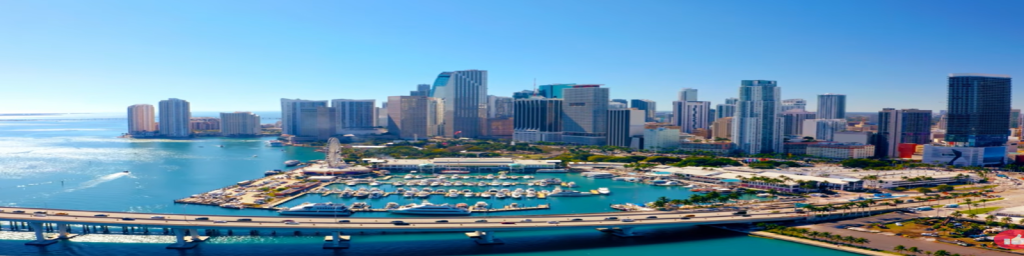
iconic architecture, and unique urban landscape/credit: across-america
2. Execution & Market Mechanics: Bridging Equities to Concrete
How does a Whale executing a trade on a tokenized stock exchange move their capital into a physical Miami office building without incurring massive friction? The execution relies on seamless on-chain plumbing.
Step A: The On-Chain Liquidation
Sensing a macro downturn caused by rising interest rates, the institutional investor sells their SEC-regulated Tokenized Equities on a compliant digital exchange (e.g., an Avalanche Subnet). The transaction settles instantly, converting the volatile stock exposure into institutional-grade USDC.
Step B: The Florida SPV Anchor
The USDC is not moved to a traditional bank. Instead, it is routed via the ERC-3643 standard into a Delaware or Florida-registered SPV (Special Purpose Vehicle). This SPV recently acquired a prime Class-A commercial tower in Miami’s Brickell Financial District. Because Florida has 0% state income tax, the SPV’s operating margins are vastly superior to similar assets in New York or San Francisco.
Step C: The Yield Dividend
The token holders are now legally anchored to physical real estate. A relocated New York hedge fund pays premium monthly rent in USD to the SPV. The SPV converts the net profit to USDC and airdrops the dividend to the Whales. The investor has successfully transformed a highly volatile stock market bet into a stable, tax-advantaged real estate bond.
Whale Capital Matrix: The Sunbelt Financial Anchor
Miami serves as the onshore counterpart to the Bahamas, capturing the massive wealth flowing from the northern US states and converting it into tokenized infrastructure.
| RWA / Tokenized Asset Hub | Asset Class & Volatility Profile | Whale Capital Strategy (The Rotation) |
|---|---|---|
| Regulated Digital Exchanges (SEC) | Tokenized Stocks (High Volatility). Tech stocks, ETFs on blockchain. | The Liquidity Source: Used for rapid capital appreciation during bull markets, but immediately liquidated when macro indicators signal tightening. |
| Miami (The Onshore Anchor) | Premium Commercial & Financial Towers. Zero state income tax advantage. | The Volatility Sink: Absorbing liquid USDC from stock liquidations to secure stable, long-term B2B rent from migrating Wall Street firms. |
| The Bahamas (The Offshore Vault) | UHNW Hospitality & Private Islands. Zero corporate/capital gains tax. | The Ultimate Shield: For non-US capital or heavily structured wealth seeking complete immunity from the US tax net while staying near US liquidity. |
Strategic Integration via 82shops
- Identify prime, tax-advantaged Miami commercial RWA targets to hedge against your tokenized stock portfolio on our Global Property Intelligence Gateway.
- Consult our AI engine for structuring automated capital rotations from tokenized equities into Florida-based real estate SPVs: AI Concierge → Talk to AI Liaison (Live).
Frequently Asked Questions (FAQ)
Why is Tokenized Real Estate safer than Tokenized Stocks?
Tokenization is just a technology. Putting a volatile tech stock on a blockchain does not stop it from crashing 30% if earnings are poor. Physical Real Estate (RWA) is fundamentally different. It is a hard asset with physical scarcity, backed by legally binding, multi-year corporate leases. When stock markets crash, Whales rotate into RWA because physical tenants must still pay rent every month, providing a stable ‘Volatility Sink.’
What makes Miami a strategic hub for Tokenized RWA?
Miami is experiencing a massive, permanent wealth migration. Major hedge funds and tech companies are fleeing the high taxes of New York and California for Florida (which has 0% state income tax). This creates an insatiable demand for Class-A commercial real estate. Tokenizing these buildings allows global Whales to tap directly into this domestic US wealth migration and extract premium, tax-advantaged yields.
How do Whales swap from Tokenized Stocks to Tokenized Real Estate?
Because both assets now live on blockchain rails, the transition is frictionless. A Whale can sell their SEC-regulated tokenized stock on an exchange, instantly receive USDC stablecoins, and immediately use those stablecoins to purchase ERC-3643 equity tokens in a Miami real estate SPV. This ‘Atomic Rotation’ bypasses the days of delay and massive fees associated with traditional banking and brokerage wires.
FOCUS
While SEC-approved “Tokenized Stocks” represent an innovation in payment networks, they are essentially still “risky assets” exposed to the massive volatility of the NASDAQ. During periods of rising interest rates, holding Tesla or Apple stocks as tokens does not guarantee avoiding a crash.
This is where Miami comes in as the perfect “Volatility Sink” and “Onshore Vault.”
Whales immediately liquidate profits (or the fear of volatility) earned in the tokenized stock or crypto markets into USDC and pour them into Miami’s core commercial real estate (RWA). Miami is the “Wall Street of the South,” where massive hedge funds and billionaires flock to escape the killer taxes (state income taxes) of New York and California. If the Bahamas is the perfect ‘offshore tax-free vault,’ Miami serves as an ‘onshore defense base’ that directly absorbs massive U.S. domestic capital.
Key C-Level Diagnosis: “Look at the ‘Underlying Asset,’ Not the Token”
This report penetrated the most fundamental insight: “Tokenized Stocks and Tokenized Real Estate (Tokenized RWA) share only the packaging (blockchain), but their substance is completely different.”
The ‘Volatility Sink’ Framework: No matter how much the SEC legalizes stock tokenization, stocks are ultimately just scraps of paper that are shaken by macroeconomic factors (such as interest rate hikes). In contrast, buildings in Miami are ‘concrete,’ where tenant companies pay monthly rent (in dollars) even if the economy is unstable. Based on this logic, the report presented a perfect portfolio replacement strategy: “Invest your winnings from tokenized stocks in Miami RWA.”
The Appeal of Miami’s ‘Onshore Tax Evasion’ (FAQ 2): If the Bahamas is a tax-free vault for siphoning money offshore, Miami (Florida) is a ‘domestic vault’ that steals money from New York’s Wall Street, backed by the powerful weapon of a “0% U.S. state income tax.” We have maximized investment feasibility by combining this massive “Wealth Migration” within the U.S. with tokenization.
Completion of Blockchain Infrastructure (FAQ 3): We have described the magic of plumbing, where the complex past procedure of selling stocks ➔ withdrawing money to a bank ➔ subscribing to a real estate fund is now completed by a mere one-minute “On-chain Swap” of “selling stock tokens ➔ receiving USDC ➔ buying Miami building tokens (ERC-3643).”
Socko/Ghost