The Yield Arbitrage Engine: Tokenizing Riviera Maya’s UHNW Resorts via the Fideicomiso Trust
Category: Global Property Insights | Institutional Execution & Plumbing
Published: September 21, 2026 | Focus: Riviera Maya (Cancun to Tulum), Gulf of Mexico & Caribbean Basin, Fideicomiso (Bank Trust), FX Arbitrage, UHNW Hospitality, Delaware SPVs, USD Cash Flow
Why is Riviera Maya a top target for institutional RWA tokenization?
The Riviera Maya corridor (from Cancun to Tulum) is the ultimate “Yield Arbitrage” engine in the Gulf of Mexico basin. Institutional Whales target Ultra-High-Net-Worth (UHNW) resorts here because they operate on a dual economy: revenue is generated in pristine US Dollars (USD) from wealthy American and global tourists, while operational expenses (labor, taxes) are paid in emerging-market costs. To bypass Mexico’s constitutional ban on foreign ownership of coastal land, syndicates use a Fideicomiso (a Mexican Bank Trust). By establishing a Delaware SPV to hold the beneficial rights of this Trust and tokenizing the SPV via ERC-3643, Whales legally extract 8-12% asymmetric USD yields, vastly outperforming compressed cap rates in Miami.
If Miami is the defensive onshore vault and the Bahamas is the zero-tax offshore shield, the Mexican Caribbean coast—specifically the Riviera Maya—is the aggressive yield engine. Global capital is pouring into the region, accelerated by massive infrastructure upgrades like the Tren Maya and the new Tulum International Airport. However, tokenizing real estate in Mexico requires profound institutional plumbing. The Mexican Constitution prohibits foreigners from directly owning land within 50 kilometers of the coast. Retail investors see this as a barrier; institutional Whales see it as a structural moat. By legally wrapping the physical real estate in a bank trust (Fideicomiso) and tokenizing the holding company, syndicates create an airtight corporate structure. The result? Digital access to physical UHNW eco-resorts that siphon US Dollar wealth from tourists while operating at a fraction of US domestic costs.
1. The Economics of the Dual-Currency Arbitrage
RWA syndicates do not just buy buildings; they buy the economic delta between revenue strength and operational cost.
| Economic Driver | Miami (Onshore Comparison) | Riviera Maya (The Arbitrage) |
|---|---|---|
| Revenue Currency (Top Line) | Paid in US Dollars (USD). | Paid in US Dollars (USD). Luxury hospitality rates are pegged identically to US premium markets. |
| Operational Expenses (Opex) | Paid in USD (Extremely high labor, insurance, and property taxes). | Paid in MXN (Pesos) / Local Costs. Labor, maintenance, and local property taxes are significantly lower. |
| Institutional Cap Rate (Net Yield) | Compressed to 4-5% due to high asset prices and massive Opex. | Expanded to 8-12%. The FX and operational arbitrage creates a massive profit margin passed directly to token holders. |
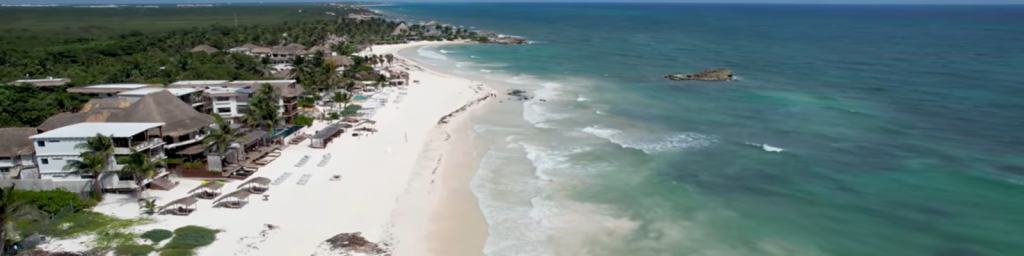
hotspot is full of Mayan history, culture and tradition./creditL toucan-travellers
2. Execution & Market Mechanics: Tokenizing the Fideicomiso
Foreigners cannot buy the Mexican beach. But they can buy the digital shares of a US corporation that owns the rights to a Mexican Bank Trust. Here is the exact institutional plumbing.
Step A: The Fideicomiso Trust
To acquire a $50M luxury boutique resort in Tulum, the syndicate establishes a Fideicomiso. A highly regulated Mexican bank holds the actual deed to the physical property. The bank acts solely as the trustee, while the “Beneficiary” retains 100% of the economic rights—the right to lease, sell, or collect profits from the resort.
Step B: The SPV Wrapper & ERC-3643
The syndicate does not assign the Beneficiary rights to an individual; they assign them to a newly formed Delaware SPV. The real estate is physically in Mexico, but the legal ownership of the profits is anchored in US corporate law. The Delaware SPV then issues equity tokens via the Tokeny ERC-3643 standard, allowing global Whales to legally buy fractional shares of the SPV while completely bypassing complex Mexican local bureaucracy.
Step C: The Yield Extraction
The luxury resort collects USD from tourists. The Mexican property management firm pays local staff and taxes in MXN. The massive net USD profit is legally funneled up to the Delaware SPV. The SPV converts the cash into USDC and airdrops the yields to the whitelisted wallets of the global investors, securing high-velocity, borderless dividend execution.
Whale Capital Matrix: The Gulf & Caribbean RWA Triad
By integrating Riviera Maya, we finalize the ultimate three-pronged RWA strategy for the Gulf of Mexico basin, allowing capital to dynamically shift based on yield requirements.
| The Gulf / Caribbean Hub | RWA Execution Focus | Whale Capital Strategy (The Function) |
|---|---|---|
| Miami (Florida, USA) | Commercial Towers, Zero State Income Tax | The Volatility Sink (Defense): Safe, low-yield onshore anchor. Protecting capital from Tokenized Stock crashes by leasing to relocating US mega-corporations. |
| The Bahamas | SMART Funds, Private Islands, Marinas | The Zero-Tax Vault (Preservation): Ultimate offshore shield. 0% corporate tax, designed for absolute wealth preservation and IRS detachment. |
| Riviera Maya (Mexico) | Fideicomiso Trusts, UHNW Hospitality | The Arbitrage Engine (Offense): High-yield generation. Siphoning US Dollar revenue while paying emerging market costs to maximize the cap rate. |
Strategic Integration via 82shops
- Discover high-yield UHNW hospitality acquisition targets in the Mexican Caribbean utilizing our Global Property Intelligence Gateway.
- Consult our AI engine for structuring cross-border Fideicomiso Trusts integrated with Delaware SPVs and ERC-3643 tokenization: AI Concierge → Talk to AI Liaison (Live).
Frequently Asked Questions (FAQ)
What is a Fideicomiso and why is it mandatory in Mexico?
Article 27 of the Mexican Constitution restricts foreigners from directly owning residential or commercial land within 50 km of the coast or 100 km of international borders (the ‘Restricted Zone’). To legally bypass this, foreigners and corporations must use a Fideicomiso—a Bank Trust where a Mexican bank holds the deed, but the foreign entity retains 100% of the economic and usage rights.
How does Tokenization simplify buying Mexican real estate?
Without tokenization, a foreign investor must personally navigate Mexican bank bureaucracy, hire local lawyers, and maintain the Fideicomiso. By tokenizing the asset, an institutional SPV (like a Delaware LLC) handles all the complex Mexican legal plumbing. The investor simply buys a digital ERC-3643 token representing shares in that SPV, instantly acquiring exposure to the asset’s yield without the legal headache.
Why is the yield (Cap Rate) higher in Riviera Maya than in Miami?
It comes down to ‘FX Arbitrage’ (Foreign Exchange). In Miami, you collect rent in USD, but you also pay massive property taxes, insurance, and labor costs in USD. In Riviera Maya, luxury resorts charge tourists premium rates in USD, but property taxes, maintenance, and labor are paid in local Mexican Pesos at significantly lower emerging-market rates. This creates a massive profit spread for token holders.
FOCUS
Following Miami (defense of the U.S. domestic market) and the Bahamas (offshore tax-free vault), there is a target that must be watched to complete the “global UHNW (ultra-high net worth) resort infrastructure” connecting the Gulf of Mexico and the Caribbean.
That target is the Riviera Maya (Cancun–Tulum section) on the Yucatan Peninsula in Mexico, not merely as a “honeymoon destination.” To C-Level executives and “whales,” the luxury resorts of the Riviera Maya are “perfect engines for FX arbitrage.”
While hotel labor costs, maintenance expenses, and taxes are paid in the emerging market currency of the Mexican Peso (MXN) or at low local rates, accommodation fees and incidental expenses paid by wealthy Americans at these top-tier resorts are collected 100% in “perfect U.S. Dollars (USD).” While the Cap Rate for Miami real estate is merely 4–5%, the Target RWA here generates an overwhelming dollar dividend of 8–12%.
In particular, because the Mexican constitution prohibits foreigners from directly owning real estate within 50km of the coast, they must use a special structure called a ‘Fideicomiso’ (Mexican bank trust); this actually serves as the most perfect legal ‘corporate shield’ for applying SPVs and tokenization (ERC-3643).
Socko/Ghost