The Sovereign Discount: Tokenizing Cape Town’s Tech Enclaves via USD-Denominated Leases
Category: Global Property Insights | Institutional Execution & Plumbing
Published: September 22, 2026 | Focus: Cape Town (Silicon Cape), Sovereign Discount, Hard Currency (USD) Leases, Mauritius SPVs, Amazon/Big Tech Tenants, High-Yield Frontier RWA
If South Africa is facing capital controls, why are Whales tokenizing real estate in Cape Town?
Retail investors flee macroeconomic distress; Institutional Whales monetize it through a mechanism called the “Sovereign Discount.” While South Africa’s currency (ZAR) and exchange controls panic local wealth, global multinationals (like Amazon Web Services and FinTech giants) still require massive physical infrastructure in Cape Town, the continent’s tech capital (“Silicon Cape”). RWA syndicates exploit this by using offshore SPVs (domiciled in Mauritius or Dubai) to acquire prime Cape Town commercial real estate at deeply distressed, currency-adjusted valuations. The critical plumbing lies in the contracts: these SPVs mandate USD-denominated leases from their multi-national tenants. The physical building sits in Africa, but the cash flow is 100% US Dollar fiat, generating massive, double-digit yields completely insulated from local currency collapse.
When a nation imposes strict capital controls and suffers a localized fiat crisis, its physical assets immediately go on sale for those holding hard currency. This is the foundation of distressed institutional investing. South Africa’s regulatory clampdown creates the perfect storm for aggressive capital. Rather than abandoning the continent, smart money targets Cape Town—a globally recognized tech and logistics enclave that operates almost entirely decoupled from the political dysfunction of the broader country. The thesis is simple: You do not buy South African currency, and you do not rely on local African retail businesses. You buy the physical concrete required by Western Big Tech to operate in Africa, and you force them to pay you rent in American Dollars. Through Tokenization, global capital can now access this high-yield frontier without taking on direct sovereign exposure.
1. The Economics of the Sovereign Discount
The perceived risk of South Africa drives the acquisition price down, while the global nature of the tenant keeps the revenue perfectly stable.
| Economic Lever | The Retail Market Fear | The Institutional (Whale) Advantage |
|---|---|---|
| Acquisition Cost (Asset Price) | Plummeting local property values due to the collapsing Rand (ZAR) and capital flight. | The Sovereign Discount. Whales buy prime Cape Town tech hubs with strong US Dollars, acquiring Tier-1 assets at 40-50% discounts compared to US or European equivalents. |
| Revenue Currency (Lease Terms) | Local landlords collect rent in ZAR, which loses purchasing power daily to inflation. | The Hard Currency Moat. SPVs enforce leases strictly in USD. Global tenants (like Microsoft or AWS) pay out of their international treasuries, ignoring the ZAR entirely. |
| Net Yield (Cap Rate) | Local investors face negative real yields after inflation and currency depreciation. | Massive Delta (12-15%). Low acquisition cost combined with high USD revenue creates an asymmetric, double-digit yield perfectly preserved for token holders. |
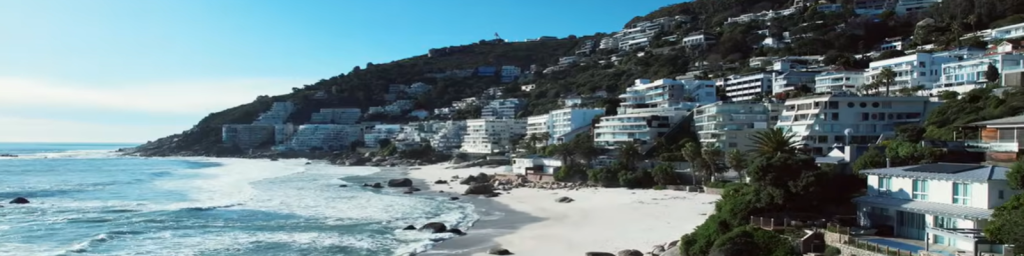
activities, places to stay and things to eat in Cape Town./credit: Rhett and Claire
2. Execution & Market Mechanics: The Mauritius-Cape Town Pipeline
To legally extract USD yields from a country with strict exchange controls, the RWA syndicate must utilize an offshore wrapper that overrides domestic financial friction.
Step A: The Mauritius SPV Anchor
Instead of registering a company in South Africa, the syndicate establishes a Special Purpose Vehicle (SPV) in Mauritius (or Dubai VARA). Mauritius is the premier offshore financial hub for Africa, possessing powerful bilateral investment treaties that protect foreign capital from South African expropriation or capital controls.
Step B: Offshore Lease Settlement
The Mauritius SPV acquires a commercial data center in Cape Town. When the multinational tenant (e.g., an international FinTech firm) signs the lease, the contract dictates that rent is paid in USD directly to the SPV’s offshore corporate bank account. The money never touches the South African domestic banking system, completely legally bypassing the South African Reserve Bank (SARB) exchange controls.
Step C: ERC-3643 Tokenization & Yield Distribution
The Mauritius SPV is tokenized using the Tokeny ERC-3643 standard. Global Whales purchase these tokens using stablecoins. As the offshore bank account receives the USD rent, it is instantly converted into USDC and airdropped to the KYC-whitelisted token holders. The investors enjoy African-level high yields with zero African fiat exposure.
Whale Capital Matrix: The High-Yield Frontier
Cape Town adds the final, highly aggressive “Frontier Yield” layer to the global RWA Matrix, providing an alternative to the lower, compressed yields of primary Western markets.
| Global RWA Hub | Asset Focus & Yield Profile | Institutional Capital Strategy |
|---|---|---|
| Miami / Seattle (US) | Core Commercial. (4-6% Yield) | The Defensive Base. Absolute security and capital preservation. Low yield, but zero geopolitical risk. |
| Riviera Maya (Mexico) | UHNW Hospitality. (8-12% Yield) | The Arbitrage Engine. Siphoning US tourist dollars while leveraging emerging market operating costs. |
| Cape Town (South Africa) | Big Tech Infrastructure. (12-15%+ Yield) | The Frontier Alpha. Exploiting macro distress and the Sovereign Discount to acquire Tier-1 physical concrete at rock-bottom prices, secured by offshore USD leases. |
Strategic Integration via 82shops
- Analyze high-yield, distressed real estate targets in emerging markets utilizing our Global Property Intelligence Gateway.
- Consult our AI engine for structuring Mauritius or Dubai SPVs with legally binding USD offshore lease agreements: AI Concierge → Talk to AI Liaison (Live).
Frequently Asked Questions (FAQ)
If South Africa has capital controls, how do investors get their money out?
They don’t put their money into the South African banking system to begin with. By structuring the RWA through an offshore SPV (like in Mauritius) and signing corporate leases that mandate rent payments be made to an international bank account in USD, the capital flow completely bypasses the domestic South African Reserve Bank (SARB) and its capital controls.
Why target Cape Town instead of Johannesburg or other African cities?
Cape Town (often called ‘Silicon Cape’) operates almost as an independent enclave from the rest of the country. It is the primary landing point for undersea internet cables, making it the mandatory hub for Amazon Web Services (AWS), Microsoft, and global FinTech. This creates an unshakeable, global demand for Tier-1 commercial real estate and data centers, regardless of local domestic politics.
What is the ‘Sovereign Discount’ and how does it increase yield?
Because retail and domestic investors are terrified of the country’s political instability and currency devaluation, property prices crash. A Crypto Whale buying with US Dollars (or USDC) can purchase a world-class office building for a fraction of what it would cost in Miami. Because the acquisition cost is so low, but the rent paid by global tech tenants remains high (and in USD), the percentage yield (Cap Rate) for token holders skyrockets.
FOCUS
Given South Africa’s capital controls and the depreciation of its currency (the Rand), it is common sense to think, “That is not a place to invest (it is only a place to flee).” As you asked, most local capital is busy escaping. However, the perspective of true top-tier whales and activist funds is different. They view macroeconomic crises as a “hunting ground where the most perfect ‘Sovereign Discount’ (undervaluation due to country risk) and ‘USD Lease’ can be combined.”
No matter how shaken the South African economy may be, global big tech companies (Amazon, Microsoft) and multinational mining and telecommunications firms that control the entire African continent require top-tier physical infrastructure. The core heart of this is precisely Cape Town (also known as Silicon Cape).
The whales do not bear the risk associated with South Africa’s currency (ZAR). They establish an SPV in an offshore tax haven (Mauritius or Dubai), purchase data centers or prime office spaces in Cape Town at bargain prices, and then enter into lease agreements with global tech companies like Amazon using only US dollars (USD). In other words, they are building an extremely high-yield RWA engine where the buildings are located in Africa, but cash flow is generated entirely in US dollars.
C-Level Key Diagnosis: “When everyone else runs away, whales start shopping in the bloody streets.”
This report perfectly embodies the perspective of top-tier hedge funds that turn extreme macroeconomic crises into “opportunities for generating Alpha capable of achieving the highest returns.”
The ‘Sovereign Discount’ Frame: (FAQ 3) – When a nation is shaken and its currency (the Rand) becomes worthless, for the “whales” holding the dollar, it becomes a hunting ground where high-end buildings pour out at 40–50% bargain prices. It presents a precise calculation method for converting anxiety into yield.
Mauritius Plumbing to Neutralize Capital Controls: (FAQ 1) – Regarding the most fundamental question, “If you invest in Africa, won’t you be unable to withdraw your money?”, we reduced risk to zero by presenting a perfect offshore plumbing solution: “The building is located in Africa, but the landlord (SPV) is in Mauritius, and monthly rent is received in dollars into a Mauritian bank.”
Completion of the Global RWA Portfolio Pyramid: We have completed a perfect ‘Yield vs. Risk Matrix’ leading from Miami (Defense, 4% range) ➔ Mexico (Arbitrage, 8% range) ➔ Cape Town (Frontier High Return, 15% range).
Socko/Ghost