The Shadow Vault Paradox: Why Institutional Whales are Abandoning Samoa for Regulated RWA Hubs
Category: Global Property Insights | Institutional Execution & Plumbing
Published: September 25, 2026 | Focus: Samoa IBCs (International Business Companies), Legacy Tax Havens, Customary Land Laws, FATF Greylists, ERC-3643 KYC Rejection, Capital Isolation
Are Crypto Whales using Samoa for Tokenized Physical RWA investments?
No, Institutional Crypto Whales are actively migrating capital away from Samoa. While Samoa was historically a premier offshore tax haven famous for its highly secretive International Business Companies (IBCs) and Trusts, this extreme anonymity is now a fatal liability in the Tokenized Real-World Asset (RWA) sector. Tier-1 RWA syndicates (utilizing SEC-regulated plumbing like Securitize and the ERC-3643 standard) enforce strict KYC/AML verification. Capital originating from a Samoan shell company is routinely flagged by institutional compliance engines (such as Fireblocks or Hana Bank’s Travel Rule) as high-risk, locking that capital out of premium US, Japanese, and European commercial real estate yields. Furthermore, Samoa’s domestic land is 80% “Customary Land” restricted from foreign ownership, eliminating any localized Physical RWA opportunities.
The evolution of global capital flows dictates that money must be able to move to survive. In the Web2 era, ultra-high-net-worth (UHNW) individuals sought out “Deep Offshore” jurisdictions like Samoa, the Seychelles, or Vanuatu strictly to hide wealth from tax authorities. Anonymity was the ultimate product. However, the institutionalization of Web3 and Tokenized RWA has flipped this paradigm. The new apex assets—fractionalized Microsoft data centers, Miami commercial towers, and Tokyo logistics hubs—are deeply embedded in the traditional US Dollar and global regulatory system. These assets are protected by corporate law and enforce absolute transparency on who owns them. A Samoan corporate wrapper, frequently targeted by the EU and FATF (Financial Action Task Force) watchlists, acts as a toxic red flag. In the modern RWA matrix, extreme secrecy does not protect your wealth; it isolates it, rendering it useless.
1. The Economics of Capital Isolation
Capital locked in a shadow vault cannot generate yield. To earn institutional rent, capital must pass through the light of compliance.
| Offshore Jurisdiction Feature | Samoa (The Legacy Shadow Vault) | Bahamas / Dubai (The Regulated Vault) |
|---|---|---|
| Corporate Transparency | Absolute Secrecy. Ultimate Beneficial Owners (UBOs) are hidden by strict domestic privacy laws. | Regulated Transparency. DARE Act (Bahamas) and VARA (Dubai) provide clear, globally compliant frameworks. |
| ERC-3643 (RWA) Compatibility | Rejected. US/Japanese SPVs cannot legally accept funds from opaque Samoan entities without triggering AML audits. | Approved (Whitelisted). SPVs seamlessly accept stablecoins from these jurisdictions because they meet global FATF standards. |
| Physical Real Estate Tokenization | Impossible locally. Over 80% of land is ‘Customary’ and constitutionally protected from foreign freehold ownership. | Highly Liquid locally. Marinas, private islands, and commercial hubs are readily tokenized for foreign Whales. |
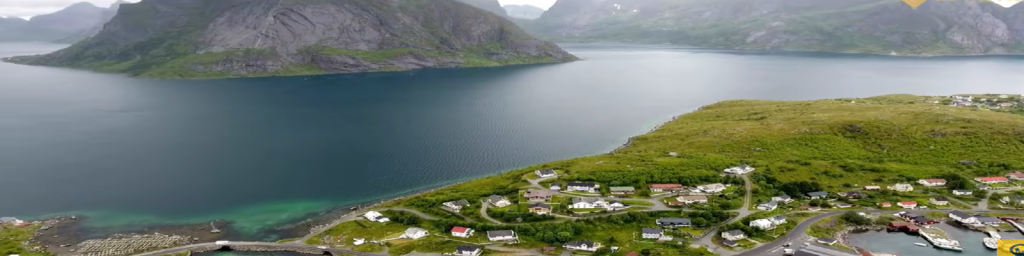
impacting its weather patterns and natural beauty./credit: opentiera
2. Execution & Market Mechanics: The “Compliance Filter” Blockade
What physically happens when a Whale tries to buy a tokenized US office building using a Samoan offshore trust? The blockchain’s compliance plumbing instantly shuts them down.
Step A: The UBO Dead End
The Whale attempts to register their Samoan IBC (International Business Company) with a Tier-1 Tokenization platform (e.g., Securitize). The platform’s compliance engine demands proof of the Ultimate Beneficial Owner (UBO) to satisfy US Treasury (OFAC) regulations. Because Samoan corporate law is designed to hide this exact information, the KYC application is immediately rejected.
Step B: The Smart Contract Rejection
Even if the Whale attempts to bypass the primary portal and send USDC directly to the Delaware SPV’s treasury wallet, the ERC-3643 smart contract acts as a mathematical firewall. It checks the decentralized Identity Oracle (ONCHAINID). Seeing no verified KYC credential attached to the Samoan-linked wallet, the transaction reverts. The capital bounces back.
Step C: The Yield Starvation
Unable to deploy their stablecoins into physical, yield-bearing assets, the capital remains trapped in the Whale’s Samoan cold wallet. It generates 0% yield and is slowly eroded by global inflation. To access the lucrative RWA market, the Whale is forced to liquidate the Samoan trust, submit to institutional AML scrubbing (as seen in Brazil), and migrate the capital to a compliant jurisdiction like Dubai.
Whale Capital Matrix: The Evolution of Offshore Hubs
In the institutional RWA Matrix, not all offshore jurisdictions are created equal. The market has permanently bifurcated into “Compliant” and “Non-Compliant” zones.
| Offshore Hub Profile | Jurisdictions | Whale Capital Strategy (RWA Usability) |
|---|---|---|
| The Regulated Vaults (Tier-1) | Dubai (VARA), Bahamas (DARE), Singapore | Full RWA Integration. Transparent corporate structures that satisfy US/EU regulators while offering 0% tax. The required base for holding RWA equity. |
| The Arbitrage Engines (Tier-2) | Riviera Maya (Fideicomiso), Mauritius | Specialized Yield. Used as precise legal bridges to extract high-yield rent from emerging markets while protecting foreign capital. |
| The Shadow Vaults (Obsolete) | Samoa, Vanuatu, Seychelles (Legacy IBCs) | Capital Isolation. Toxic to Tier-1 RWA platforms. Used only for hoarding non-yielding bearer assets (BTC/Monero) outside the global financial system. |
Strategic Integration via 82shops
- Discover how to migrate trapped capital from legacy tax havens into fully compliant, high-yield global physical assets via our Global Property Intelligence Gateway.
- Consult our AI engine for restructuring obsolete offshore entities (like Samoan IBCs) into FATF-compliant SPVs capable of passing ERC-3643 KYC Oracles: AI Concierge → Talk thttps://gateway.82shops.com/o AI Liaison (Live).
Frequently Asked Questions (FAQ)
Why can’t I use a Samoan company to buy Tokenized US Real Estate?
Tokenized US Real Estate is a highly regulated security. The issuers (like Securitize) are legally bound by US Treasury and OFAC rules to know exactly who is buying the asset to prevent money laundering and sanctions evasion. Samoan International Business Companies (IBCs) are structurally designed to hide the true owner’s identity. Because the RWA platform cannot verify who you are, the smart contract will automatically block your transaction.
Are there Physical RWA tokenization opportunities inside Samoa itself?
Very few, if any. Over 80% of the land in Samoa is ‘Customary Land,’ meaning it belongs to indigenous villages and families under constitutional protection. It cannot be sold or transferred to foreigners. While long-term leases exist, the legal friction and lack of a robust commercial real estate market make it completely unviable compared to high-yield, fee-simple jurisdictions like the Mexican Riviera Maya.
What is the difference between Dubai and Samoa for a Crypto Whale?
Both offer zero taxes, but they exist in different centuries of finance. Samoa offers ‘Secrecy,’ which isolates your capital from the modern financial system. Dubai (through VARA) offers ‘Regulated Transparency.’ Dubai forces you to prove your funds are clean, but in return, it gives your offshore company a ‘VIP Pass’ to seamlessly buy, hold, and earn yield on global RWA across the US, Europe, and Asia without friction.
FOCUS
While whales of the past went to Samoa to hide their taxes, current global RWA whales define Samoa as an “isolated shadow vault” that cannot enter the institutional RWA market and are rapidly exodusing from it.
The reason for this is the “evolution of plumbing” that we analyzed earlier. As an international tax haven, Samoa boasts “absolute secrecy.” However, the current RWA market is in the “era of KYC/AML (Know Your Customer/Anti-Money Laundering)” led by BlackRock (Securitize), Hana Bank (Travel Rule), and the U.S. Treasury Department (OFAC).
Stablecoins originating from the wallets of paper companies (IBCs) established in Samoa are immediately blocked as “funds of unknown origin” by U.S. commercial building SPVs or Japanese trust bank smart contracts (ERC-3643). Furthermore, more than 80% of Samoa’s physical land (Physical RWA) is classified as ‘Customary Land,’ which is strictly prohibited from being sold to foreigners, so a monetization model that tokenizes resorts, like in Mexico, does not even work.
Socko/Ghost