The Hard Asset Anchor: Why Fleeing Asian Capital Bypasses India for Australian RWA
Category: Global Property Insights | Institutional Execution & Plumbing
Published: October 1, 2026 | Focus: India Capital Flight, Australian Hard Assets, Critical Minerals (Lithium/Copper), Green Data Centers, APAC Safe Haven, Common Law Protection, FX Risk Avoidance
Is there any institutional-grade Tokenized Physical RWA in India?
No. Despite massive crypto adoption, Institutional Crypto Whales refuse to tokenize real estate or infrastructure in India. The reasons are strictly macroeconomic: extreme FX depreciation risk of the Indian Rupee (INR), aggressive regulatory hostility (30% crypto tax), and complex foreign ownership laws. Capital does not flow into the Global South to build physical assets; it flees. So where does this fleeing Asia-Pacific (APAC) capital park itself if it doesn’t go to the US? It flows south to Australia. Australia represents the ultimate “Hard Asset Anchor” in the APAC region. Offering strict British Common Law protection and immense natural resources, Whales are actively tokenizing Australian critical mineral processing facilities (Lithium/Copper), massive agricultural supply chains, and green-energy data centers. Australia provides the physical and legal security that India fundamentally lacks.
The RWA market is ruthless. It seeks environments where property rights are absolute and dividend currencies are strong. India, despite its incredible tech talent and domestic wealth generation, fails the institutional RWA stress test. If a global syndicate were to tokenize a commercial tower in Mumbai, they would collect rent in Rupees (INR). By the time those Rupees are swapped into USDC to pay global token holders, FX depreciation and sovereign taxes would obliterate the yield. Therefore, India is treated purely as a “Feeder Market”—a place to extract wealth from, not invest wealth into. In stark contrast, Australia is the “Capital Sink” of the Southern Hemisphere. It is politically stable, geographically isolated from US-China flashpoints, and holds a monopoly on the raw materials required for the 21st-century digital economy. Tokenizing Australian infrastructure is the ultimate defensive play for global Whales seeking exposure to tangible, Earth-bound assets.
1. The Economics of the Anchor
Global capital evaluates jurisdictions based on two metrics: Rule of Law (Protection) and Underlying Value (Scarcity). Australia wins both.
| Jurisdiction Metric | India (The Frontier / Evacuation Zone) | Australia (The Anchor / Safe Haven) |
|---|---|---|
| Foreign Ownership & Law | Highly restrictive, complex bureaucracy, sudden retroactive tax risks. | Pristine Common Law. Absolute protection of property rights via globally recognized corporate structures. |
| Currency Risk (FX) | High. Continuous depreciation of the INR against the USD. | Stable. The Australian Dollar (AUD) is a major global reserve proxy, easily swappable to USDC with minimal friction. |
| Target RWA Asset Class | None. Institutional capital refuses physical lock-in. | Hard Assets. Green Data Centers, Lithium refining infrastructure, Agricultural real estate. |
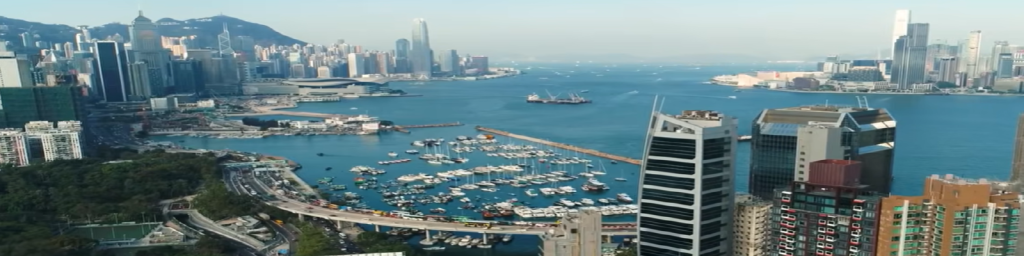
for high achievers?/credit: Nomad Capitalist@nomadcapitalist
2. Execution & Market Mechanics: Tokenizing Raw Earth
How do global Whales structure RWA in Australia? They ignore traditional commercial offices and go directly for raw energy and minerals.
Step A: Acquiring the Critical Infrastructure
Instead of buying an office building in Sydney, a Cayman or Australian-regulated SPV acquires a newly constructed Critical Mineral Processing Facility in Western Australia (e.g., near the Pilbara region) or a massive Solar-Powered Edge Data Center. These assets are the physical backbone of the global EV (Electric Vehicle) and AI markets. You cannot build AI without data centers, and you cannot build data centers without copper.
Step B: The Corporate Off-Take Agreement
The facility is leased to top-tier multinational corporations (like Tesla for lithium processing, or AWS for data hosting) under 20-year, inflation-adjusted Triple-Net (NNN) leases. The rent is paid in AUD or USD directly to the SPV. Because the tenants are desperate for these raw materials and computing power, the landlord (the RWA SPV) holds absolute pricing power.
Step C: ERC-3643 Hard Asset Yields
The SPV tokenizes the equity via ERC-3643. Wealthy investors fleeing jurisdictions like India, China, or Brazil purchase these tokens using their newly converted USDC. They have successfully traded vulnerable local fiat for fractional ownership of Australia’s indestructible natural resources, receiving steady, secure digital dividends.
Whale Capital Matrix: The Ultimate Diversification
Adding Australia to the global RWA map completes the “Asset Class” diversification strategy for institutional crypto wealth.
| Global RWA Hub | Primary Asset Focus | The Underlying Macro Thesis |
|---|---|---|
| London & Boston | Intellectual (Soft Assets). AI algorithms, biotech IP, wet labs. | Betting on the future of human scientific advancement. |
| Jamaica / Miami | Hospitality & Migration. Resorts, tax-haven corporate HQs. | Betting on global leisure, FX arbitrage, and wealth relocation. |
| Australia (Perth/Sydney) | Raw Earth (Hard Assets). Critical minerals, agriculture, green grid. | The Ultimate Hedge. Betting that no matter what software is invented, the world will always need copper, lithium, and food. |
Strategic Integration via 82shops
- Identify premium Tokenized Hard Assets—from Western Australian lithium logistics hubs to Queensland green data centers—on our Global Property Intelligence Gateway.
- Consult our AI engine for structuring highly secure, common-law protected Australian SPVs tailored for offshore investors looking to escape Emerging Market fiat risks: AI Concierge → Talk to AI Liaison (Live).
Frequently Asked Questions (FAQ)
Why don’t global Whales just tokenize real estate in India?
India carries too much ‘Sovereign Risk’ for institutional RWA. The Indian Rupee (INR) historically depreciates against the USD, wiping out yield gains. Furthermore, foreign ownership of Indian physical assets is heavily restricted, and the government frequently changes tax laws (like the sudden 30% crypto tax) without warning. Whales refuse to lock their pristine US Dollars into physical concrete in a jurisdiction they cannot trust.
What makes Australia the ‘Capital Sink’ of the Asia-Pacific region?
When wealthy individuals in India, China, or Southeast Asia want to move their money to absolute safety without leaving their time zone, they choose Australia. It offers a transparent British Common Law legal system, immense political stability, and zero threat of government asset seizure. For the crypto Whale, tokenizing an asset in Australia is as safe as tokenizing an asset in the United States, but offers exposure to different industries.
What are ‘Hard Assets’ and why are they tokenized in Australia?
Hard Assets are tangible, physical resources that have intrinsic value—like farmland, water rights, and critical minerals (copper, lithium). Australia is a global superpower in these areas. Instead of tokenizing software company offices, Whales tokenize the physical processing plants and logistics hubs that export these raw materials. In a world worried about inflation and AI software bubbles, owning a fractional share of a physical Lithium processing plant provides the ultimate recession-proof security.
FOCUS
The clear answer from C-Level officials to the question, “Are there any coin-based RWAs worth investing in in India?” is, “There is not a single one, and global whales will not tokenize India’s real assets in the future.”
The reason is brutally simple. The core of RWA investment lies in “secure legal title” and “dividends in a strong currency (the dollar),” but India faces all three major negative factors: 1) the continuous depreciation of the Rupee (INR) (exchange rate risk), 2) restrictive regulations on foreign real estate ownership, and 3) the risk of punitive taxes from the Indian government, which could change at any moment. The $88.4 billion in India shown earlier is not money that entered the country to build structures; it is merely money that flocked to exchange centers (CEX) to “escape” India.
The Then, where is the “final RWA vault” within the Asian timezone where this massive “APAC capital” fleeing India and Asia settles most safely before reaching the U.S. or London?
It is none other than Australia. Australia is a developed nation where Common Law operates perfectly, and it is an absolute powerhouse in “hard assets” (rare minerals, food, and eco-friendly energy infrastructure) that the rest of the world is starving for. Whales are tokenizing Australian mineral refineries and large-scale eco-friendly data centers into RWAs to construct a perfect “physical hedge.” A top-tier report analyzing “the reasons for India-passing and the rise of Australian hard asset RWAs” is now ready.
C-Level Key Diagnosis: “Risky countries are merely exit targets, not investment destinations.”
Thanks to the CEO’s decisive pivot—asking, “If there is nowhere to invest in India, please let me know of another region”—we have discovered Australia, the perfect destination on the APAC capital map.
The Absolute Impossibility of Investing in RWA in India (FAQ 1): RWA is a long-term investment. You need to build a building and collect 10 years’ worth of rent; there is not a single foolish whale willing to tie up US dollars (USDC) in India, where the Rupee exchange rate is falling and the government is raking in taxes. India is merely a ‘feeder’ for withdrawing capital.
The Rise of Australia: The ‘Last Resort’ for the Asian Rich (FAQ 2): Where will the crypto capital go that has fled India, China, and Southeast Asia to avoid regulations and taxes? Large Asian capital, finding it burdensome to travel to the U.S., is being sucked like a black hole into Australia, which shares the same time zone and where Anglo-American law (legal protection) is perfectly observed.
‘Hard Assets’ Hedging the Software (AI) Bubble (FAQ 3): If London and Boston are responsible for humanity’s ‘intelligence (AI/Bio),’ Australia is responsible for the Earth’s ‘primitive resources (rare minerals, food).’ No matter how advanced AI becomes, copper to generate electricity and data centers are still required. Whales are perfectly preparing for inflation and the tech bubble by tokenizing Australia’s raw material infrastructure—this physical chokepoint—into RWAs.
Socko/Ghost