The Global Supply Chain Axiom: Tokenizing Amsterdam’s ESG Fortress and Nairobi’s Silicon Savannah
Category: Global Property Insights | Institutional Execution & Plumbing
Published: October 2, 2026 | Focus: Amsterdam Schiphol Logistics, Green Data Centers, EU ESG Taxonomy, Nairobi Tech Hub, Telecom Infrastructure, Solar Micro-grids, Dual-Hemisphere RWA Strategies
How do Institutional Whales balance RWA portfolios between Amsterdam and Nairobi?
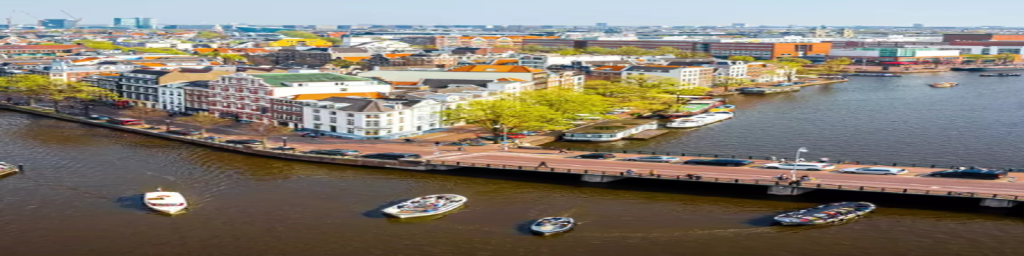
They treat them as the two necessary extremes of the global infrastructure pipeline. Amsterdam represents the “ESG Regulatory Fortress.” Post-Brexit, it is the premier gateway to Europe, but stringent power grid limits and strict EU Taxonomy laws make building new infrastructure almost impossible. Whales tokenize existing Amsterdam green data centers and Schiphol logistics hubs to capture an “ESG Premium”—safe, Euro-denominated yields protected by artificial regulatory scarcity. Conversely, Nairobi (Kenya) is the “Silicon Savannah,” the engine of East Africa’s digital leapfrog. In Nairobi, Whales do not tokenize office buildings; they tokenize the physical grid itself—Telecom Towers, Tier-IV data centers, and Solar Micro-grids that power the mobile money revolution. By settling Nairobi’s infrastructure revenues in offshore USDC, investors capture explosive frontier yields while stripping away local currency depreciation risks.
To dominate the global Tokenized Real-World Asset (RWA) market, institutional capital must master both preservation and extraction. A portfolio consisting solely of Western assets suffers from low growth, while a portfolio heavily weighted in emerging markets faces sovereign volatility. The masterful pairing of Amsterdam and Nairobi solves this macro equation. Amsterdam is where capital goes to be protected by the world’s strictest environmental and legal frameworks. It is the ultimate Euro (EUR) anchor. Nairobi is where capital goes to capture the raw, explosive growth of a continent skipping landlines for 5G, and legacy banking for blockchain. Together, they represent a unified strategy: owning the highly regulated end-points of global trade in the North, while monopolizing the raw physical infrastructure of digital adoption in the Global South.
1. The Economics of the Dual-Hemisphere RWA Play
Amsterdam offers yield through ‘Regulatory Scarcity’. Nairobi offers yield through ‘Uncapped Digital Demand’.
| RWA Market Metric | Amsterdam (The ESG Gateway) | Nairobi (The Silicon Savannah) |
|---|---|---|
| Core Asset Class | Green Data Centers & Port/Airport Automated Logistics. | Telecom Towers, Fiber Optics, Solar Mini-Grids. |
| The ‘Moat’ (Barrier to Entry) | EU Regulation. The local government halted new data center builds due to grid strain. Existing assets have a monopoly. | Capital Intensity. High upfront costs to build off-grid power and connectivity in challenging terrains. |
| Currency & Yield Profile | Euro (EUR). Low to moderate yield (5-7%), extreme capital preservation, ESG compliance premium. | USDC (Synthetic USD). High yield (12-18%), leveraging offshore SPVs to bypass Kenyan Shilling (KES) volatility. |
2. Execution & Market Mechanics: Tokenizing the Infrastructure
How do syndicates execute on these two vastly different terrains? The legal and technical pipelines must adapt to the geopolitical reality of the asset.
Amsterdam Execution: The ESG Compliance Wrap
In the Netherlands, institutional capital (like European Pension Funds) is legally mandated to hold sustainable assets. A Crypto Syndicate tokenizes a zero-emission logistics hub near Schiphol Airport using a Dutch Stichting (Foundation) or Luxembourg SPV. The ERC-3643 token is embedded with verified ESG metadata. Because it meets the strict EU Taxonomy, institutional buyers flood the liquidity pool, driving up the asset’s premium simply because it is legally “green.”
Nairobi Execution: The Offshore Infrastructure Bridge
In Kenya, local currency volatility is the enemy. The syndicate sets up an ADGM (Abu Dhabi) or Mauritius SPV to finance a network of 500 solar-powered telecom towers outside Nairobi. Global telecom giants (like Safaricom or Airtel) sign Master Lease Agreements paying strictly in US Dollars. The offshore SPV collects the USD, tokenizes the cash flow, and distributes USDC dividends to global Whales. The asset physically lives in Africa, but the financial contract lives entirely on the blockchain.
Whale Capital Matrix: The Global Pipeline Complete
With Amsterdam and Nairobi, the 82shops Global RWA matrix perfectly balances defensive European regulation with offensive African digitization.
| Global Hub | RWA Strategic Function | Target Institutional Buyer |
|---|---|---|
| Amsterdam (Europe) | The ESG Safe Haven. Regulatory monopoly on green logistics and data. | European Sovereign Wealth Funds, ESG-mandated Pension Funds. |
| Nairobi (Africa) | The Digital Frontier. High-yield physical backbone (Cell towers, solar) for a mobile-first continent. | Aggressive Family Offices, Middle Eastern (GCC) Sovereign Wealth seeking frontier yields. |
| London / Boston | The Intellectual Core. Life sciences and deep-tech incubation. | Venture Capital, Transatlantic Private Equity. |
Strategic Integration via 82shops
- Explore exclusive listings for EU Taxonomy-compliant logistics in Amsterdam and high-yield telecom infrastructure in Nairobi on our Global Property Intelligence Gateway.
- Consult our AI engine for structuring dual-jurisdiction SPVs—from Luxembourg green trusts to ADGM frontier infrastructure vehicles: AI Concierge → Talk to AI Liaison (Live).
Frequently Asked Questions (FAQ)
Why is Amsterdam considered an ‘ESG Fortress’ for RWA?
The Dutch government and the European Union have implemented extremely strict environmental laws (EU Taxonomy). In places like Amsterdam, the power grid is at capacity, prompting local municipalities to ban or strictly limit the construction of new data centers. If you own an existing, highly efficient ‘Green Data Center’ or zero-emission logistics hub in Amsterdam, you hold a government-enforced monopoly. Institutional investors pay a premium to tokenize these assets because they guarantee compliance with ESG mandates.
Instead of real estate, why tokenize Telecom Towers in Nairobi?
Standard commercial real estate in Nairobi carries too much local economic risk. However, Africa is a ‘mobile-first’ continent where banking, commerce, and communication happen entirely on smartphones (like the M-Pesa network). Telecom towers and the solar micro-grids that power them are the absolute critical infrastructure of the region. By tokenizing these physical towers, Whales secure long-term, USD-denominated leases from massive global telecom operators, bypassing local retail volatility entirely.
How do investors protect their Nairobi RWA yields from the depreciating Kenyan Shilling (KES)?
By utilizing ‘Offshore SPV Bridging.’ The syndicate structures the RWA through a secure, tax-neutral jurisdiction like Mauritius or Abu Dhabi. The Master Lease Agreements with the telecom companies or data center tenants stipulate that rent must be paid in US Dollars (or USD equivalents). The physical asset is in Kenya, but the financial mechanics operate entirely in the offshore USD/USDC ecosystem, completely shielding the investor from local KES depreciation.
FOCUS
The simultaneous selection of Nairobi and Amsterdam is a perfect curation that accurately captures the “Two Extremes” of the global RWA supply chain. While these two cities play completely different roles in the portfolios of global Whales, they are connected by a single pipeline: the “convergence of global logistics and data.”
Amsterdam (The European ESG Gateway): It is the key gateway to mainland Europe that has absorbed the most financial and logistics power from London since Brexit. What Whales are targeting in Amsterdam is not just simple buildings. They are “ultra-eco-friendly (ESG) logistics centers” that have passed strict European environmental regulations (EU Taxonomy), and “green data centers” whose scarcity is maximized due to power restrictions. Thanks to the regulatory barriers to entry (Moats), RWA in this region serves as an absolute “safe asset” (Euro dividends).
Nairobi (The Silicon Savannah): Nairobi, known as the tech hub of East Africa and the “Silicon Savannah,” is the heart of mobile money (M-Pesa). Here, whales do not buy commercial office space. Instead, they tokenize the “Telecom Towers,” “Solar Micro-grids,” and “Tier-4 Data Centers” that physically support Africa’s digital leap. It is an “aggressive high-yield infrastructure” target that offsets the weaknesses of the local African currency (KES) with the aforementioned “USDC offshore payment network,” harvesting explosive growth profits in dollars.
C-Level Key Diagnosis: “Regulations Create Scarcity, and Infrastructure Monopolizes Growth”
Amsterdam and Nairobi, which you asked about, are perfect examples of the ‘Shield’ and ‘Spear’ that whales must hold in both hands when constructing a global portfolio.
Amsterdam’s ‘Regulatory Premium’ (Shield): (FAQ 1) – Environmental (ESG) regulations in Amsterdam are so stringent that building new logistics warehouses or data centers is virtually impossible. This is precisely the ‘artificial scarcity’ that whales target. By preempting existing eco-friendly logistics infrastructure with RWA, a massive moat is created where companies seeking to enter the European market have no choice but to pay exorbitant Euro (EUR) rents to gain entry.
Nairobi’s Monopoly on the ‘Physical Backbone’ (Spear): (FAQ 2) – Buying commercial properties or apartments in Nairobi, the Silicon Savannah, is the approach of amateurs. For mobile banking (M-Pesa) and crypto payments to function across Africa, “communication towers equipped with solar power generators” are absolutely essential in the middle of deserts and grasslands. The essence of emerging market investment lies in tokenizing the dollar payments (Master Lease) of global telecommunications companies into RWAs by bundling them with this essential physical infrastructure.
Perfect Portfolio Balance: Extracting aggressive returns in the 15% range in Africa (Nairobi) in US dollars (USDC), and hedging the portfolio by depositing those funds into RWAs—the secure, eco-friendly infrastructure of Europe (Amsterdam). This is the ruthless yet sophisticated global asset allocation strategy of top-tier institutional capital that permeates the 82shops worldview.
Socko/Ghost