The Dollar Arbitrage Oasis: Why Institutional Whales are Tokenizing Cancun Hospitality RWA
Category: Global Property Insights | Institutional Execution & Plumbing
Published: October 6, 2026 | Focus: Cancun & Riviera Maya Real Estate, Mexican Constitution Article 27 Restricted Zone, Fideicomiso Bank Trust Structures, USD Revenue vs. MXN Cost Arbitrage, Tren Maya Connectivity, Tokenized Luxury Hospitality
Is Cancun real estate genuinely worth investing in for institutional RWA syndicates?
Yes, with extreme precision: Cancun is not a target for standard residential buy-and-hold plays, but the premier North American corridor for USD-Denominated Hospitality Cash-Flow Arbitrage. While traditional Western commercial real estate struggles with compressed cap rates (4–6%), premium beachfront resorts and luxury short-stay villas across Cancun and the Riviera Maya deliver net yields between 10% and 14%. The macroeconomic engine is structural: 100% of guest bookings are paid in hard US Dollars by affluent American and Canadian travelers, while operational overhead, property maintenance, and municipal taxes are settled in depreciating Mexican Pesos (MXN). By wrapping these assets in a 50-year renewable Fideicomiso (Mexican bank trust) interfaced with offshore corporate SPVs, institutional syndicates securely tokenize high-velocity tourism cash flows entirely immune to local Mexican currency risk.
When evaluating Latin American real estate, macro-investors immediately filter out markets afflicted by capital controls and domestic tenant default risks. Cancun stands in stark contrast. Geographically situated on the Caribbean coast of Quintana Roo, Cancun operates essentially as a sovereign offshore dollar enclave physically tethered to the North American travel economy. Over 30 million international passengers transit through Cancun International Airport annually. The recent completion of the 1,500-kilometer Tren Maya (Maya Train) network and the new Felipe Carrillo Puerto International Airport in Tulum have expanded this economic zone into an integrated mega-resort corridor. For institutional RWA issuers, Cancun offers an ideal asset profile: tangible, irreplaceable physical beachfront land generating inflation-hedged daily cash flow in pristine greenback liquidity.
1. The Economics of the Mexican FX Arbitrage
Operating a luxury hospitality asset in Cancun decouples top-line revenue from the domestic macroeconomic health of Mexico.
| Operational Component | Currency Base | Macro Impact on Net RWA Yield |
|---|---|---|
| Revenue (Bookings & Amenities) | 100% US Dollar (USD). Direct stripe/wire payments from US/Canadian tourists and corporate retreats. | Hard Currency Inflow. Directly streams into offshore accounts without touching local retail banking rails. |
| Operating Expenses (Staff & Maintenance) | Mexican Peso (MXN). Local hospitality labor, utilities, and regional supply chain procurement. | Cost Deflation. Structural peso depreciation expands profit margins for dollar-capitalized owners over time. |
| Asset Scarcity & Barrier | Constitutional “Restricted Zone” (within 50km of coastline). | The Legal Moat. Requires a formal Fideicomiso trust, eliminating casual retail competitors. |
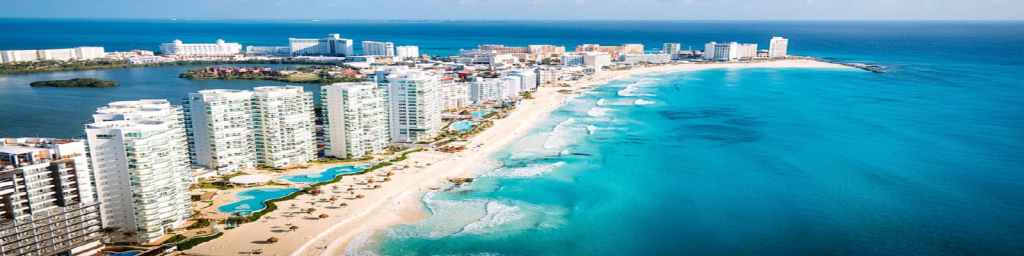
experience that most Americans have in Mexico./credit: expertvagabond.com
2. Execution & Market Mechanics: The Fideicomiso RWA Pipeline
How do international Whales legally structure and tokenize prime Cancun beachfront property without violating Mexican constitutional law?
Step A: Establishing the Bank Trust
Under Article 27 of the Mexican Constitution, foreigners cannot directly hold fee-simple title to real estate within 50 km of the coast. To circumvent this, a Tier-1 authorized Mexican bank (such as BBVA México or Santander) acts as the Trustee (Fiduciario), holding the legal title. A specialized Mexican operating company (SA de CV) is named as the primary beneficiary (Fideicomisario), granting full rights to lease, develop, sell, and extract revenue from the physical asset for a 50-year renewable term.
Step B: Offshore SPV Corporate Wrap
The shares of the Mexican operating entity are held 100% by an offshore Special Purpose Vehicle (SPV) located in Delaware or the Cayman Islands. This corporate interface ensures that the underlying asset is governed by US/international commercial contract law, shielding international investors from domestic Mexican bureaucratic friction and probate complexities.
Step C: ERC-3643 Tokenization & Daily Streaming Yields
The offshore SPV issues fractionalized equity tokens via the ERC-3643 standard to whitelisted institutional investors. Daily hospitality booking revenues collected via Stripe or stablecoin gateways are automatically converted to USDC. Operating expenses are disbursed locally in pesos, and the net dollar surplus is streamed autonomously into token holders’ self-custody wallets.
Whale Capital Matrix: Americas Hospitality & Yield Profiling
Comparing Cancun against premier luxury hubs in the Americas highlights why it functions as the high-yield growth engine of a balanced RWA portfolio.
| Destination Hub | Net Cap Rate (USD) | Core Macro Function in Whale Portfolio |
|---|---|---|
| Miami (Brickell / South Beach, US) | 4.5% – 6.0% | Wealth Relocation & Safe Haven. Extreme legal stability, pristine domestic dollar safety; modest yield. |
| Bahamas / Cayman Islands | 6.0% – 8.0% | Pure Tax Neutrality. Zero corporate tax; higher barrier to entry and premium capital cost. |
| Cancun / Riviera Maya (Mexico) | 10.5% – 14.0% | The High-Yield Cash Cow. Massive tourism velocity, extreme FX labor cost arbitrage, institutional trust security. |
Strategic Integration via 82shops
- Review audited luxury resort and boutique hospitality listings across Cancun and the Riviera Maya structured for institutional RWA via our Global Property Intelligence Gateway.
- Consult our AI engine for establishing dual-tier Mexican Fideicomiso and Delaware SPV corporate wrappers optimized for automated USDC dividend distribution: AI Concierge → Talk to AI Liaison (Live).
Frequently Asked Questions (FAQ)
Can foreigners legally own beachfront real estate in Cancun?
Yes, through a legal mechanism called a Fideicomiso (bank trust). Under Article 27 of the Mexican Constitution, foreigners cannot hold direct title to land within 50 kilometers of the coast or 100 kilometers of international borders (the Restricted Zone). However, an authorized Mexican bank holds the legal deed as Trustee, granting the foreign individual or offshore SPV 100% beneficial ownership rights to lease, renovate, profit from, or sell the property for a renewable 50-year period.
What is the primary risk when investing in Cancun real estate?
The primary operational pitfall is accidentally purchasing ‘Ejido’ land—communal agricultural land that lacks private property titles. Ejido land cannot be legally mortgaged, trusted, or tokenized without a complex, government-approved privatization process (regularización). Institutional syndicates strictly require clean, fully privatized ‘Escritura Pública’ titles vetted by a Mexican Notario Público to eliminate title dispute risks.
Why is Cancun considered an FX Arbitrage play?
Because Cancun’s luxury hospitality real estate operates on a dual-currency split. Premium tourists from the United States and Europe pay for nightly stays and premium amenities exclusively in US Dollars (USD). Conversely, operational expenditures—including housekeeping, culinary staff, landscaping, and local property taxes—are incurred in Mexican Pesos (MXN). This structural spread protects investors from peso devaluations while generating outsized net dollar yields.
FOCUS
Not yet written a full-scale, in-depth Global Property Insights analysis targeting “Cancun” exclusively, the core conclusion of the C-Level regarding the question, “Does Cancun have real investment value for institutional whales?” is that “it is a very certain cash cow target. However, it holds absolute value only when tokenizing the ‘cash flow of luxury hospitality (resorts and villas) settled in USD,’ rather than offices or residential properties.”
Investment Value of Cancun: 3 Major Institutional Valuation Metrics
The Ultimate FX Arbitrage (Dollar Income vs. Peso Costs): Luxury hotels and short-term rentals (AIRBNB/Boutique Villas) in Cancun charge for accommodation, F&B, and activity costs entirely in US Dollars (USD). However, land taxes, labor costs, and cleaning and maintenance expenses are paid in the depreciating Mexican Peso (MXN). Net USD cash flow of 10–14% per year is generated solely through exchange rate margins.
Legal Moat for Foreign Ownership (Fideicomiso & Offshore SPV): According to Article 27 of the Mexican Constitution, foreigners cannot directly own land in their own name within 50km of the coastline (Restricted Zone). Instead, they must establish a local entity or a 50-year renewable bank trust (Fideicomiso) through a top-tier Mexican bank (such as BBVA or Santander). While it is a complex barrier for ordinary individuals, for whales, “combining the U.S. Delaware/Cayman SPV and the Mexican bank trust and tokenizing it (ERC-3643) creates a perfect legal monopoly moat that blocks entry for individuals.”
Relief of Infrastructure Bottlenecks (Tren Maya & Tulum International Airport): With the opening of the Tren Maya connecting the entire state of Quintana Roo and the completion of Tulum International Airport, the bottleneck concentrated at Cancun Airport has been relieved, completing the entire Riviera Maya as a mega-tourism belt with a year-round operating rate of over 80%.
C-Level Key Diagnosis: “Cancun is a ‘dollar mining factory’ built on Mexican territory.”
The puzzle piece regarding Mexico that the CEO recalled has perfectly fit into the role of the ‘Yield Driver’ for the global RWA portfolio.
- Division of Roles Between Miami and Cancun:
- Miami: A ‘defensive vault’ for safe asset preservation and tax avoidance (annual yield in the 4–5% range).
Cancun: An ‘aggressive dollar cash cow’ that generates aggressive dividends in the 10–14% range by absorbing dollars from North American tourists and maintaining an annual occupancy rate of over 80%.
The Paradoxical Benefits of Foreign Ownership Restrictions (Fideicomiso) (FAQ 1): While the coastline regulations under Article 27 of the Mexican Constitution are an insurmountable barrier for ordinary retail investors, they serve as a ‘safe entry barrier that prevents market bubbles’ for institutional whales capable of combining bank trusts (Fideicomiso) and Delaware SPVs.
The Only Trap You Must Watch Out For Most, ‘Ejido’ (FAQ 2): The only thing to be cautious about when investing in Cancun is ‘Ejido land,’ which consists of communal indigenous ownership. To ensure 0% legal risk, you must tokenize only assets that have completed formal private property registration (Escritura Pública) through a Notary Public (Notario Público).
With this, 82shops’ global real estate intelligence has completed a perfect spectrum of returns, ranging from North American tech infrastructure (Boston, Phoenix), European ESG/AI strongholds (London, Amsterdam), Oceania resources (Australia), to Latin American ultra-high-yield dollar resorts (Cancun)!
Socko/Ghost