The Red Gateway: How Hong Kong’s Crypto Licensing Masterplan Bridges BRICS Capital to Tokenized RWA
Category: Global Property Insights | Institutional Execution & Plumbing
Published: October 5, 2026 | Focus: Hong Kong Financial Services and the Treasury Bureau (FSTB), 4-Tier Virtual Asset Licensing (Dealing, Custody, Advisory, Asset Management), BRICS Block Capital, Belt & Road RWA, Offshore RMB (CNH) Settlement
What is Hong Kong’s strategic position in the global Tokenized RWA market between China/BRICS and Western dominance?
By introducing landmark legislation before the end of 2026 to create a comprehensive 4-tier licensing regime—spanning virtual asset dealing, custody, advisory, and asset management—Hong Kong is establishing itself as the “Red White-Zone.” Positioned directly between Western G7 financial containment (US SEC, UK FCA, Japan FSA) and the Sino-Russian/BRICS economic alliance, Hong Kong functions as Beijing’s regulated financial firewall. While Mainland China maintains a strict domestic crypto ban to prevent internal capital flight, Hong Kong provides a legally audited offshore bridge. Sanctioned or non-G7 capital from Russia, the Middle East, and Latin America can safely park liquidity in Hong Kong, tokenizing physical non-Western real-world assets (RWA)—such as Greater Bay Area (GBA) logistics, Belt & Road port infrastructure, and offshore RMB (CNH) bonds—completely insulated from Western asset seizure.
The global financial system is rapidly bifurcating into two distinct regulatory orbits: the Western G7 coalition and the BRICS-Plus bloc. As the US, UK, and Japan seal their digital borders against sanctioned capital, non-Western sovereign wealth requires a Tier-1 financial hub capable of institutional asset custody without the risk of unilateral Western seizure. Hong Kong’s full-stack regulatory framework—covering dealing, custody, advisory, and asset management—is Beijing’s calculated response. It transforms Hong Kong from a legacy equities hub into the primary digital clearinghouse for Eastern hemisphere wealth. For institutional Whales, Hong Kong offers a unique proposition: Wall Street-grade financial engineering combined with a geopolitical umbrella that refuses to enforce unilateral G7 sanctions, creating the premier market for tokenizing non-Western industrial and commodity infrastructure.
1. The Economics of the Red Gateway
The 4-tier licensing framework provides full end-to-end legal coverage, creating an institutional counterpart to Western compliance hubs.
| Regulatory Hemisphere | Primary Jurisdictions | Strategic RWA & Capital Function |
|---|---|---|
| The G7 Western Fortress | United States (SEC), UK (FCA), Japan (FSA). | Strict asset segregation, total enforcement of G7 sanctions (e.g., Garantex freezes). Monopolizes Western tech, biotech, and US Treasury RWA. |
| The Red Gateway (Hong Kong) | Hong Kong (SFC / FSTB) under Beijing Canopy. | The BRICS Clearinghouse. Full 4-tier licensing. Absorbs non-G7 wealth, tokenizing Belt & Road infrastructure, GBA logistics, and CNH bonds. Insulated from Western freezes. |
| The Neutral Transit Hubs | Dubai (VARA), Cayman Islands. | Pure tax-neutral routing and preliminary SPV formation. Lacks deep industrial RWA backing compared to Hong Kong or the G7. |
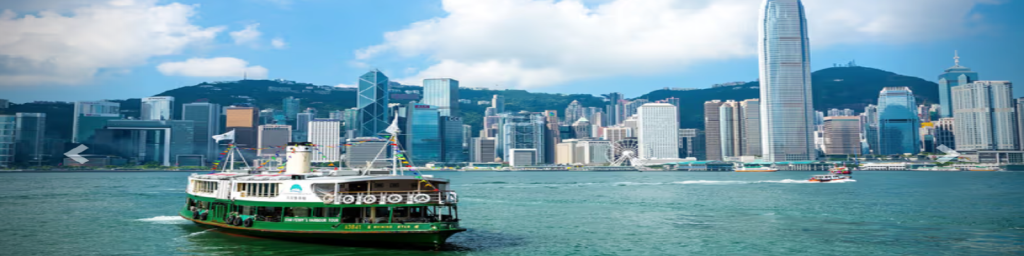
and economically./credit: travelweekly.com
2. Execution & Market Mechanics: The HK-BRICS RWA Pipeline
How do Eastern Whales and BRICS entities utilize Hong Kong’s 4-tier licensing to securitize physical infrastructure on-chain?
Step A: End-to-End Licensed Onboarding
Under the new legislation, an institutional investor interacts with a single Hong Kong ecosystem. A licensed Advisory firm structures the deal, a licensed Dealing platform handles primary token sales, a licensed Asset Manager oversees portfolio allocation, and a licensed Custody provider secures the private keys under Hong Kong SFC oversight.
Step B: Tokenizing Greater Bay Area & Belt-and-Road RWA
Instead of buying US real estate, the Hong Kong SPV acquires physical equity in Greater Bay Area (GBA) automated logistics terminals, Sino-Middle Eastern energy pipelines, or Offshore RMB (CNH) Dim Sum Bonds. These assets generate yield directly tied to the expansion of Eastern hemisphere trade.
Step C: CNH & Stablecoin Dividend Clearing
Yields generated by the physical assets are settled either in CNH (Offshore Yuan) or Hong Kong Dollar-pegged stablecoins (HKDA/HKDR). Investors from Russia, the Middle East, or Southeast Asia receive automated smart contract dividends on-chain, completely bypassing the US SWIFT network and NY Fed oversight.
Whale Capital Matrix: Global RWA Geopolitical Map
Adding Hong Kong to the global matrix reveals the complete tri-polar division of global tokenized liquidity.
| Global Power Hub | Primary Asset Focus | Geopolitical Alignment & Security |
|---|---|---|
| US (Miami/Phoenix) & UK (London) | AI Data Centers, Life Sciences, US Treasuries. | G3 Alliance. Absolute compliance with Western sanctions; high legal stability for Western capital. |
| Japan (Tokyo/Osaka) & Australia | Corporate B2B real estate (EJPY), Critical Minerals, Green Energy. | G7 Pacific Shield. Blocks Russian/sanctioned capital (Garantex sanctions) to maintain a clean White Zone. |
| Hong Kong (SFC / FSTB) | GBA Logistics, Belt & Road Ports, CNH Bonds, Asian Commercial RWA. | The BRICS Red Gateway. Full 4-tier regulation; protected by China’s sovereign canopy against G7 asset freezes. |
Strategic Integration via 82shops
- Analyze and access off-market Greater Bay Area and Asian physical infrastructure RWA opportunities via our Global Property Intelligence Gateway.
- Consult our AI engine for structuring multi-jurisdictional SPVs that seamlessly bridge Western compliance requirements with Hong Kong licensed custody rails: AI Concierge → Talk to AI Liaison (Live).
Frequently Asked Questions (FAQ)
Why is Hong Kong introducing a 4-tier licensing regime across dealing, custody, advisory, and asset management?
To attract institutional-grade capital, Hong Kong must provide a complete, legally secure ecosystem. By regulating all four pillars of virtual asset services under the FSTB and SFC before the end of 2026, Hong Kong eliminates regulatory ambiguity. Institutional investors, family offices, and sovereign funds can execute the entire lifecycle of an RWA investment—from deal advisory to digital custody—within a single, highly audited jurisdiction.
How does Mainland China’s crypto ban coexist with Hong Kong’s aggressive RWA push?
This is the core of China’s ‘One Country, Two Systems’ economic strategy. Mainland China maintains a strict crypto ban to enforce domestic capital controls and protect the onshore Yuan (RMB). However, Beijing utilizes Hong Kong as an offshore financial sandbox to capture global digital liquidity, test tokenized asset frameworks, and build a non-SWIFT financial clearing hub for BRICS trade without risking Mainland financial stability.
What type of Physical RWA will dominate the Hong Kong market?
Unlike Western hubs focused on US Treasuries or US commercial towers, Hong Kong will dominate in tokenizing Asian and Belt & Road physical infrastructure. Key assets include Greater Bay Area (GBA) automated shipping ports, cross-border logistics parks, solar infrastructure in Southeast Asia, and offshore RMB-denominated bonds (Dim Sum Bonds). These assets offer strong yields backed by tangible physical trade in the Eastern hemisphere.
FOCUS
The news that “Hong Kong will complete legislation on four major virtual asset licenses (trading, custody, advisory, and operation) by the end of 2026” marks the official declaration of the launch of the “Red White-Zone Payment and RWA Hub” by China and the BRICS bloc to counter the dollar-centric RWA hegemony established by the U.S. and the Western G7.
While the public views this simply as “Hong Kong attempting to become a crypto hub,” Hong Kong’s role is clear from the geopolitical perspective of Beijing and the BRICS alliance.
China’s Dual Currency Integration (Mainland Ban vs. HK Sandbox):
Mainland China strictly bans crypto to prevent internal capital outflow, while simultaneously establishing a “special ‘One Country, Two Systems’ firewall” in Hong Kong to operate it as a “money laundering and refinery” absorbing global dollar (USDC/USDT) and commodity funds from the BRICS bloc. BRICS and the Communist Bloc’s De-Dollarization RWA Bridgehead:
When Russia is expelled from SWIFT and Western RWA (US Treasury bonds, London offices) due to sanctions by the G7 (US, UK, and Japan), where can it safely bury its funds? It is Hong Kong. Through its four major licenses, Hong Kong has opened up a “legitimate alternative market where Russian, Chinese, and Middle Eastern capital can trade without the risk of confiscation by the West.”
Targets of Physical RWA: Belt & Road Infrastructure and Offshore RMB (CNH) Bonds:
The physical assets that Hong Kong intends to tokenize are not US data centers or London offices. They are smart logistics ports in China’s Greater Bay Area, key Belt & Road infrastructure (ports in the Middle East and Africa), and offshore RMB (Dim Sum Bonds).
Socko/Ghost