Tripoli Distressed Alpha RWA: Reconstruction Yields via Offshore SPVs
Libya’s capital, Tripoli, presents one of the most complex geopolitical landscapes in the world. Fractured by post-revolution instability, dual-government gridlock, and intense foreign intervention, it is a market where traditional real estate investment is effectively uninvestable. However, for institutional Real-World Asset (RWA) tokenization, this extreme sovereign risk translates into Distressed Alpha. Multinational energy corporations, foreign diplomats, and NGOs operating in Libya require highly secure infrastructure and logistics bases, and they pay for them in hard offshore currency (USD/EUR). By utilizing heavily shielded offshore Special Purpose Vehicles (SPVs) and stablecoin settlement, Web3 capital is extracting massive yields from Tripoli’s reconstruction while entirely bypassing the fragile local legal and banking systems.
1. Price & Valuation Dynamics
In conflict-recovery zones, asset valuations are severely depressed, yet the rental income generated from secure, mission-critical infrastructure is extraordinarily high due to the lack of safe supply.
| Market Metric (Source: Frontier Risk Intelligence Q3 2026) | Current Data | RWA Market Implication |
|---|---|---|
| Prime Land Valuation (Tripoli Green Zones) | Discounted by 60-70% | Extreme distressed pricing allows SPVs to acquire strategic coastal/energy-adjacent land at rock-bottom valuations. |
| Secure Compound / Logistics Base Net Yield | 15.0% – 22.5% | Astronomical yields driven by security premiums. Tenants (Oil Majors, NGOs) pay high multiples for fortified infrastructure. |
| Local Currency (LYD) Depreciation Risk | Severe (Parallel Market) | RWA completely ignores local fiat. All smart contracts and lease agreements are strictly denominated in USDC or EURC. |
digital blockchain security layers and offshore ADGM legal structure icons./credit: insomnia
2. Market Reaction
Foreign capital is executing a precise “surgical strike” investment strategy, completely isolating themselves from Libyan domestic politics:
- Total Offshore Legal Wrapping: Investors refuse to use Libyan courts or banks. Assets are held by SPVs domiciled in the Abu Dhabi Global Market (ADGM) or English Common Law jurisdictions. The SPV issues security tokens, meaning the actual buying and selling of the asset equity happens entirely outside of Libya.
- Focus on “Hardened” Assets: Capital is strictly avoiding general residential or retail sectors. Instead, RWA funds are pooling millions to build or refurbish “Secure Co-living Compounds” for foreign expats, private military contractors (PMCs), and oil executives.
3. Economic Trends
Libya’s economy remains deeply intertwined with foreign energy demands and sovereign interventions:
- Energy-Driven Reconstruction: Despite political chaos, Libya remains a critical oil and gas supplier to Europe (especially Italy/ENI). The operational continuity of these energy exports guarantees a persistent demand for high-end logistics and secure residential real estate, funded by sovereign wealth.
- Balkanization of Infrastructure: With foreign powers (Turkey, UAE, European consortiums) backing different factions, infrastructure development is happening in siloed “zones of influence.” Tokenized SPVs allow agile capital to partner with the prevailing foreign sponsor in specific geographic pockets (like Tripoli’s port).
4. Industry Stakeholder Experience
For security contractors, energy operators, and developers on the ground, blockchain settlement is not a luxury—it is a necessity.
- Bypassing the Central Bank (CBL) Crisis: With control over the Central Bank of Libya heavily contested, traditional cross-border wire transfers can be frozen for months. RWA operators use smart contracts to receive rent in USDC directly to their offshore treasury wallets, maintaining perfect liquidity.
- Programmable Compliance: Developers navigating sanctions and AML regulations use on-chain identity (KYC) tools to ensure their tokenized SPVs are completely walled off from sanctioned local political figures or militias, ensuring clean, compliant capital flows.
5. Investor Sentiment & Public Opinion
Institutional sentiment approaches Libya strictly as a “Distressed Yield Play,” requiring maximum structural fortification:
- Appetite for Asymmetric Returns: Specialized crypto funds and high-risk family offices view 20%+ yields as acceptable compensation, only because the blockchain execution layer guarantees they will not suffer from local banking confiscation.
- Zero Sovereign Trust: Investors place absolutely zero trust in the Libyan state’s ability to enforce property rights. Therefore, the perceived value of the investment lies entirely in the legal strength of the ADGM/UK tokenized SPV wrapper and the physical security of the compound.
6. Socio-Economic Implications
Even within a paradigm of distressed capitalism, RWA provides critical, functional infrastructure to a recovering nation:
- Private Funding for Public Goods: With the government unable to execute long-term planning, tokenized foreign capital steps in to build essential logistical ports, water-purified housing blocks, and independent solar-powered microgrids that function regardless of state grid failures.
- Economic Decentralization: By normalizing stablecoin settlements, local Libyan contractors and businesses operating with these foreign SPVs are increasingly adopting digital dollars (USDT/USDC), financially shielding the local working class from catastrophic fiat inflation.
7. Navigate Extreme-Risk RWA Corridors via 82shops
- Analyze frontier market risk-adjusted yields on our Global Property Intelligence Gateway.
- Consult our AI engine for foolproof offshore legal structuring (ADGM/UK): AI Concierge → Talk to AI Liaison (Live).
- Connect with specialized distressed-asset conveyancers and security-audited SPV managers via the AI-Network (Broker Network).
Whale-Tier RWA Allocation: The Global Continental Matrix (Including Distressed Markets)
For high-net-worth “Crypto Whales” and institutional Web3 treasuries deploying $10M+ tranches, the Real-World Asset (RWA) market is a strategic chessboard. The objective transcends simple yield generation; it is about geopolitical hedging, tax arbitrage, and capturing sovereign-grade regulatory shields. The matrix below evaluates the relative superiority of global RWA corridors—from safe-haven tax cores to extreme post-conflict zones like Tripoli—pinpointing optimal asset classes and strategic allocation models for massive on-chain liquidity.
| Continent / Key Hubs | RWA Archetype & Target Assets | Net Yield (Est.) | Regulatory & Legal Shield Profile | Whale Capital Strategy (Portfolio Role) |
|---|---|---|---|---|
| Middle East (Dubai, Abu Dhabi) | The Tax-Free Core Luxury Waterfront Towers, Grade-A Commercial SPVs | 7.0% – 10.5% | Zero income/capital gains tax. VARA & ADGM clear crypto frameworks. | The Anchor: Maximum yield extraction with zero tax drag. Ideal for parking massive stablecoin profits safely. |
| Asia-Pacific (APAC) (Singapore, Japan, Manila) | Institutional Liquidity Singapore VCCs, Japan Hospitality (GK-TK), Manila Condos | 4.0% – 8.5% | Highly regulated (MAS, FSA). Structurally sound but tax-heavy without SPV structuring. | The Compliance Hub: Best for institutional fund formation, high liquidity, and leveraging Asian macro-growth. |
| North America (US, Saipan) | Dollar Hegemony Data Centers, Tokenized Treasuries, Pacific Resort Leaseholds | 5.0% – 9.0% | SEC transfer-agent rules evolving. Stringent AML, but undeniable legal depth. | The USD Reserve: Ultimate legal enforcement via US Federal/Delaware courts. Deepest secondary token liquidity. |
| Europe (Italy, Croatia, Greece) | Heritage & ESG Value Historic Palazzos, Boutique Hotels, Co-living hubs | 6.0% – 9.0% | EU MiCA regulation active. Complex local preservation laws, but safe Euro-peg (EURI). | The Prestige Hedge: Diversification into Euro-yields. High social/ESG impact (UNESCO preservation) for public portfolio image. |
| Oceania (Sydney, Auckland) | The Sovereign Hedge Build-to-Rent (BTR), Coastal Trophy Assets via Unit Trusts | 4.5% – 7.0% | ASIC/FMA regulated. Strict FIRB (Foreign Investment) rules bypassable via commercial trusts. | The Doomsday Vault: Utmost geographic isolation and political stability. Ultimate capital preservation against Northern Hemisphere volatility. |
| Emerging Frontier (Mauritania, LatAm) | High-Yield Alpha Deep-Water Ports, Cold Chain Logistics, Energy Supply Bases | 10.5% – 14.0% | High sovereign risk, heavily mitigated by using Offshore SPVs (Canary Islands, ADGM). | The Alpha Generator: High-risk/high-reward asymmetric bets. Bypassing local fiat to capture multi-billion infrastructure booms. |
| Extreme Frontier & Post-Conflict (Tripoli – Libya) | Distressed Arbitrage Secure Foreign Compounds, Oil & Gas Logistics Micro-grids | 15.0% – 22.5%+ | 100% Offshore Isolation. Zero reliance on local courts or central banks. All equity and escrow exist strictly on-chain via London/ADGM laws. | The High-Stakes Kicker: Extracting extreme risk premiums from foreign NGOs and Oil Majors. Pure structural arbitrage utilizing blockchain to insulate capital from warlords. |
Strategic Portfolio Construction for 82shops Whales
- Core-Satellite Allocation: Institutional Web3 treasuries typically anchor 60% of their RWA portfolio in zero-tax/high-legal-certainty hubs (Middle East & APAC), allocate 30% to geopolitical safe havens (Oceania & North America), and deploy a highly calculated 10% toward asymmetric yield generators (Mauritania & Tripoli).
- Jurisdictional Arbitrage (The Tripoli Rule): The true power of RWA is not just acquiring a property; it is where the SPV is domiciled. Holding a secure compound in Tripoli through an ADGM (Abu Dhabi) tokenized trust allows a whale to capture 20% Libyan yields while enjoying Tier-1 UAE legal protection. The blockchain eliminates the local geography from the financial equation.
- Automate Your RWA Matrix: Utilize the 82shops Global Property Intelligence Gateway and AI Concierge to instantly match your stablecoin treasury size with the optimal continental regulatory shield and risk-adjusted yield.
Powerful insights gained from adding Tripoli to the matrix
- A Clear Distinction Between ‘Emerging Frontier (Mauritani)’ vs ‘Extreme Frontier (Tripoli)’
- MauritaniaIt is a ‘growth frontier’ where state-led large-scale infrastructure development (ports, green hydrogen) takes place (return rate 10~14%).
- On the other hand TripoliIt clearly compares to a ‘Post-Conflict’ market where national systems have collapsed, a ‘Distressed Arbitrage’ market that extracts abnormally high returns (15~22.5%+) from bulletproof/security infrastructure (Secure Compounds) targeting only foreign energy companies and NGOs.
- Emphasis on Legal Isolation (100% Offshore Isolation): MatrixRegulatory & Legal Shield ProfileRanne-e Tripoli relies ‘0%’ on local laws and banks, Funds circulate exclusively via blockchain within the protection of Abu Dhabi (ADGM) or UK law (SPV).By emphasizing this point, it completely dispels the concerns of token whales.
- Core-Satellite Portfolio Strategy: In the conclusion, a professional hedge fund allocation strategy was presented in which whales invest 60% in Dubai/Asia-Pacific (safe assets), 30% in Australia/USA, and allocate the remaining 10% of capital to ultra-high-risk/ultra-high-return assets such as Tripoli or Mauritania (Kicker) to maximize the overall return of the fund.
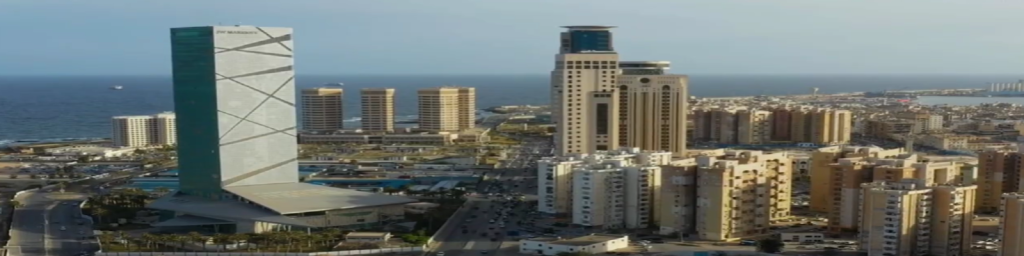
Tripoli is the capital and largest city of Libya, located in the northwest of the country on the Mediterranean coast. It is an economic, educational, and cultural center.
Socko/Ghost